What Does a Stalled Mushroom Bag Look Like?
A mushroom bag is considered "stalled" when the mycelium stops growing or fruiting despite seemingly appropriate conditions.
Common signs include:
- No visible mycelium growth for several days
- Delayed or absent pin formation
- Thin, weak-looking mycelium
- A fully colonized bag that refuses to fruit
- Slow development compared to expected timelines
Now don't panic right away. Remember that mushroom species grow at different rates. Oyster mushrooms may fruit within weeks, while some gourmet species naturally take longer.
1. Temperature Outside the Ideal Range
Temperature is one of the most important factors affecting mushroom growth.
If temperatures are too low, mycelium metabolism slows down dramatically. If temperatures are too high, the mycelium becomes stressed and may stop growing altogether.
Typical Temperature Ranges
- Oyster mushrooms: 18-24°C
- Lion's Mane: 18-22°C
- Shiitake: 16-24°C
A simple thermometer placed next to your grow bag makes it easy to keep the recommended range for your specific species.
How to Fix It
Move the grow bag to an area with more stable temperatures. Avoid placing it near radiators, direct sunlight, air conditioning units, or drafty windows.
2. Lack of Fresh Air Exchange
Mushrooms need oxygen to develop properly.
During colonization, fresh air requirements are relatively low. However, once it's time to fruit, insufficient fresh air can cause growth to stall.
This often leads to:
- No pin formation
- Long stems and tiny caps
- Delayed fruiting
- Weak or malformed mushrooms
How to Fix It
Increase fresh air exchange by:
- Opening your fruiting chamber regularly
- Improving room ventilation
Be careful not to overdo it, as excessive airflow can dry out the substrate.
3. Low Humidity
Mushrooms are mostly water. Without adequate humidity, they struggle to form pins and develop healthy fruiting bodies.
A substrate may appear fully colonized but still fail to fruit if the surrounding environment is too dry.
Signs of Low Humidity
- Dry surface on the substrate
- Cracked or shrinking mushrooms
- Pins that stop developing
How to Fix It
Aim for humidity levels between 85-95% during fruiting. Regular misting of the growing environment (not directly soaking the mushrooms) can help maintain proper moisture levels.
4. The Bag Needs More Time
Sometimes growers intervene too early.
Many beginners expect mushrooms to fruit immediately after full colonization. In reality, the mycelium often needs additional time to consolidate before producing mushrooms.
Patience is often the solution.
How to Fix It
If the bag appears healthy and contamination-free, continue maintaining proper conditions and give it a few more days. Sudden changes can sometimes do more harm than good.
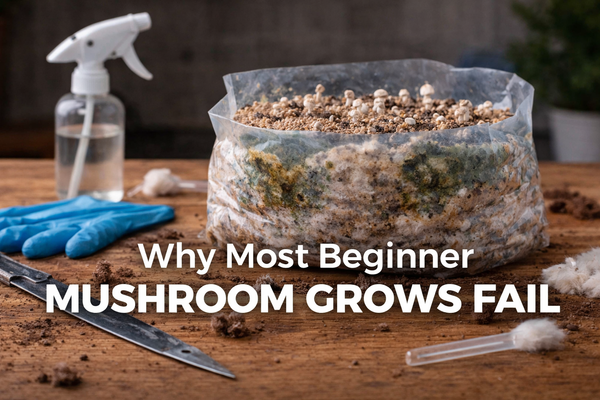
5. Contamination Is Competing with the Mycelium
Contamination is a common cause of why mushrooms stop growing.
Bacteria, molds, and wild fungi compete with mushroom mycelium for nutrients and space. Even minor contamination can significantly slow growth.
Warning Signs
- Green, black, pink, or orange patches
- Sour or unpleasant odors
- Slimy substrate
- Unusual discoloration
How to Fix It
Unfortunately, contaminated bags are rarely recoverable. Isolate the bag from other grows and dispose of it if this happens.
6. Moisture Levels Are Incorrect
Both overly wet and overly dry substrates can cause problems.
Too Much Moisture
Too much water reduces oxygen availability and encourages the growth of bacteria.
Signs include:
- Wet or slimy substrate
- Pooling water
- Sour smells
Too Little Moisture
A dry substrate cannot support healthy mycelial activity.
Signs include:
- Shrinking substrate block
- Dry surface
- Slow fruiting
How to Fix It
Maintaining proper moisture from the beginning is key. Once a bag becomes severely overhydrated or dehydrated, recovery can be difficult.
7. Insufficient Fruiting Triggers
Many mushroom species require environmental signals before they begin fruiting.
These triggers can include:
- Increased fresh air
- Higher humidity
- Exposure to indirect light
- Slight temperature changes
Without these signals, a fully colonized bag may simply continue sitting dormant.
How to Fix It
Check the fruiting requirements of your species and make sure it has everything it needs.
When Should You Give Up on a Stalled Bag?
Not every stalled grow is a lost cause.
If the bag remains white, healthy-looking, and free from contamination, a bit of patience and a few small adjustments may still help.
However, if you notice contamination, strong odors, or no progress after several weeks despite good conditions, starting a new grow may be the best option.
Final Thoughts
A stalled mushroom bag can be frustrating, especially when you've put a lot of time and effort into the growing process. Fortunately, most stalls are caused by environmental factors such as temperature, humidity, fresh air exchange, or moisture balance. These are things you can easily fix once you know where the problem lies.
Successful mushroom cultivation often comes down to consistency. By providing stable conditions and understanding your mushroom's needs, you'll greatly improve your chances of seeing healthy pins and a rewarding harvest.
Have a stalled mushroom bag right now? Work through the causes above one by one, and you'll likely identify the issue before long.
Afterwards, you can get back to growing. Smarter and prepared for whatever may happen.