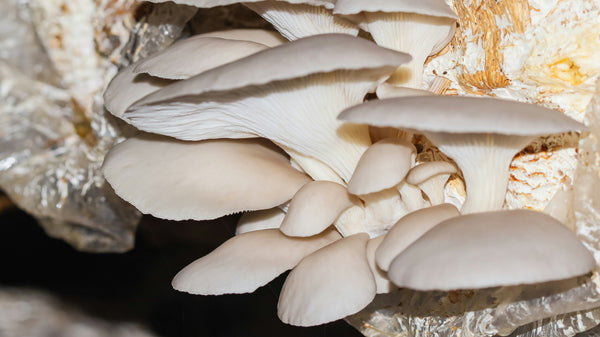
5 common mushroom growing mistakes and what to do instead for better results.
Growing mushrooms at home can be surprisingly simple when you follow the right steps. You inoculate the bag, wait for colonization, provide the right fruiting conditions, and let the grow develop. Most beginner mushroom growing problems do not happen because the process is too difficult. They usually happen because a few important basics get overlooked, such as clean inoculation, proper sterile technique, balanced moisture, enough fresh air exchange, and leaving the grow in stable conditions.
The good news is that mushroom cultivation does not need to be complicated. When you use clean materials, follow proper sterile technique, and give the mycelium the environment it needs, growing mushrooms at home becomes much easier and far more enjoyable. Once the fundamentals are in place, the process is simple to follow.
1. Most contamination starts with spawn or poor sterile technique.
Contamination is one of the most frustrating parts of mushroom cultivation because once it appears, the grow is compromised. What many beginners do not realize is that contamination usually starts long before fruiting. In many cases, it starts with contaminated spawn, dirty tools, unsanitized surfaces during inoculations, or poor inoculation technique. Grain is highly nutritious, which makes it ideal not only for mushroom mycelium, but also for bacteria and molds if they are introduced early.
What people often do wrong.
A lot of beginners focus on the fruiting stage and assume contamination must have started there. But the real problem often happens during inoculation. They inject a mushroom grow bag without wiping the injection port properly, handle equipment with bare or dirty hands, fail to sterilize the needle correctly, or work in a dusty room and hope for the best. Even a good sterile substrate can fail if contamination is introduced at the start.
How to do it properly.
Use clean, reliable spawn or culture, and treat inoculation like the most sensitive step in the entire mushroom cultivation process. Wipe the injection port with isopropyl alcohol and the area surrounding it. Sterilize the needle tip with flame until it glows red before inoculation. Keep the work area as clean and still as possible. Do not rush. For beginner mushroom growing especially, cleaner technique matters more than trying to optimize every small detail. If the start is clean, the rest of the process becomes far easier.
2. Too much moisture can ruin an otherwise healthy grow.
Many beginners hear that mushrooms need humidity and assume that more moisture always means better results. That is one of the most common mistakes in indoor mushroom growing. Mushrooms do need a humid environment, but that does not mean the surface of the bag or fruiting block should stay soaked. There is a big difference between humid air and wet conditions. Too much water on the surface creates stress, encourages problems, and often leads to weak or messy growth.
What people often do wrong.
The usual mistake is over-misting. Beginners spray too often, too heavily, or directly onto developing mushrooms until water starts collecting instead of evaporating gradually. They see condensation and assume it is always a good sign. In reality, heavy pooling water, soaked surfaces, and constantly wet fruiting conditions are not ideal. A mushroom grow bag should stay moist and balanced, not swampy.
How to do it properly.
Aim for a humid environment with only light surface moisture, not standing water. The goal is to keep the block from drying out while still allowing the surface to breathe. If the grow looks glossy, waterlogged, or starts collecting droplets that do not disappear, back off on misting. Stable humidity works better than constant spraying. In practice, better moisture management often means doing less, not more.
3. Mushrooms need fresh air exchange just as much as humidity.
Humidity gets most of the attention, but fresh air exchange is just as important for healthy mushroom fruiting. Mushrooms produce carbon dioxide as they grow, and if that builds up around them, their shape and quality start to change. This is especially noticeable with oyster mushrooms, which can develop long stems and very small caps when fresh air exchange is insufficient. Good mushroom cultivation is not just about keeping moisture in. It is also about letting stale air out and fresh air in.
What people often do wrong.
A lot of beginners create a humid space, but make it too closed off. They are afraid that airflow will reduce humidity, so they keep the grow in stagnant air. The result is often obvious once fruiting begins: thin mushrooms, stretched stems, undersized caps, or fuzzy growth at the base. They then try to fix it by adding even more misting, when the real issue is a lack of fresh air exchange.
How to do it properly.
Think in terms of balance. You want humidity high enough to support fruiting, but enough fresh air exchange to prevent carbon dioxide buildup. That does not mean blasting the grow with harsh airflow all day. It means regularly replacing stale air with fresh air while maintaining stable fruiting conditions. If your mushrooms are growing tall, narrow, or deformed, fresh air exchange is one of the first things you should check.
4. Moving and checking the grow too often slows everything down.
One of the most underestimated mistakes in beginner mushroom growing is simply not leaving the grow alone. People get excited, which is natural, but then they start touching the bag, lifting it, rotating it, squeezing it, moving it to different places, or checking it so often that they keep changing the conditions around it. Mushrooms usually perform better with stable conditions than with constant intervention. Even when the intention is good, too much handling often creates unnecessary stress.
What people often do wrong.
Many beginners treat the grow like something they need to keep helping. They move it closer to a window, then away from the window. They inspect it physically instead of visually. They touch developing pins or reposition the mushroom grow bag repeatedly because they want to optimize every detail. But every extra move can create stress, affect humidity, airflow, and surface conditions, and in some cases even bruise delicate tissue.
How to do it properly
Set the grow up in a good location and let it develop. Observe it, but do not interfere unless there is a clear reason. Stable moisture, stable fresh air exchange, and stable temperature usually outperform constant adjustments. The more experience you gain in mushroom cultivation, the more you realize that better results often come from doing less, not more.
5. Not every strange color means contamination.
This is where many beginners panic too early. They see blue, gray, or another unusual shade and immediately assume the grow is contaminated. Sometimes that is true, but not always. Mycelium and mushrooms can change appearance because of bruising, dryness, stress, or environmental shifts. Color alone is not enough to diagnose a problem all the time. What matters is the full pattern: smell, texture, growth behavior, speed of change, and whether the area looks truly invasive or just stressed.
What people often do wrong.
The most common mistake is reacting to one visual sign in isolation. A little bruising or discoloration appears, and they throw the whole grow away or start changing everything at once. On the other hand, some growers ignore genuine warning signs because they assume every issue is harmless bruising. Both reactions come from the same problem: jumping to conclusions too fast.
How to do it properly.
Look at the full context before deciding what you are seeing. Ask yourself: Is the area spreading quickly? Does it smell sour, rotten, or otherwise wrong? Is the texture powdery, slimy, or clearly unlike healthy mycelium? Is growth slowing down or collapsing? Bruising and stress often appear after handling or environmental fluctuation. Real mushroom contamination usually brings a broader pattern of decline. The best response is calm observation, not instant panic.
Final thoughts.
Most beginner mushroom growers fail for very ordinary reasons. The spawn was not clean enough. The environment stayed too dirty during inoculation. Fresh air exchange was missing. The growth was handled too much. Or a harmless change in mycelium was mistaken for contamination and triggered unnecessary intervention. The point is not that mushroom cultivation is fragile. It is that it rewards consistency.
If you keep your process clean, your fruiting conditions balanced, and your hands off the grow more often, your results usually improve faster than you expect. Growing mushrooms at home starts feeling difficult when too many variables are changing at once. It starts feeling simple when the fundamentals of mycology and mushroom cultivation are done well every time.
FAQ
1. Why does mushroom contamination happen so easily?
Mushroom contamination usually starts during inoculation, when bacteria or mold are introduced through dirty tools, poor sterile technique, or low-quality spores/mushroom liquid culture. In mushroom cultivation, contamination prevention starts at the very beginning.
2. How often should I mist a mushroom grow bag?
There is no fixed schedule that works for every setup. The goal is to maintain humidity without soaking the surface. If the block or mushrooms stay wet for too long, you are probably misting too much.
3. What does poor fresh air exchange look like in mushrooms?
Common signs include long stems, small caps, fuzzy feet, and weak-looking fruiting bodies. In indoor mushroom growing, poor fresh air exchange is one of the most common causes of deformed mushrooms.
4. Is blue mycelium always contamination?
No. Blue discoloration can be bruising or stress, especially after handling or drying. True contamination usually comes with other signs such as spreading patches, unusual smells, slimy texture, or stalled growth.
5. What is the most common beginner mushroom growing mistake?
The most common mistake is trying to manage too many variables at once. Beginners often over-mist, over-handle, and overreact instead of keeping clean technique and stable fruiting conditions.